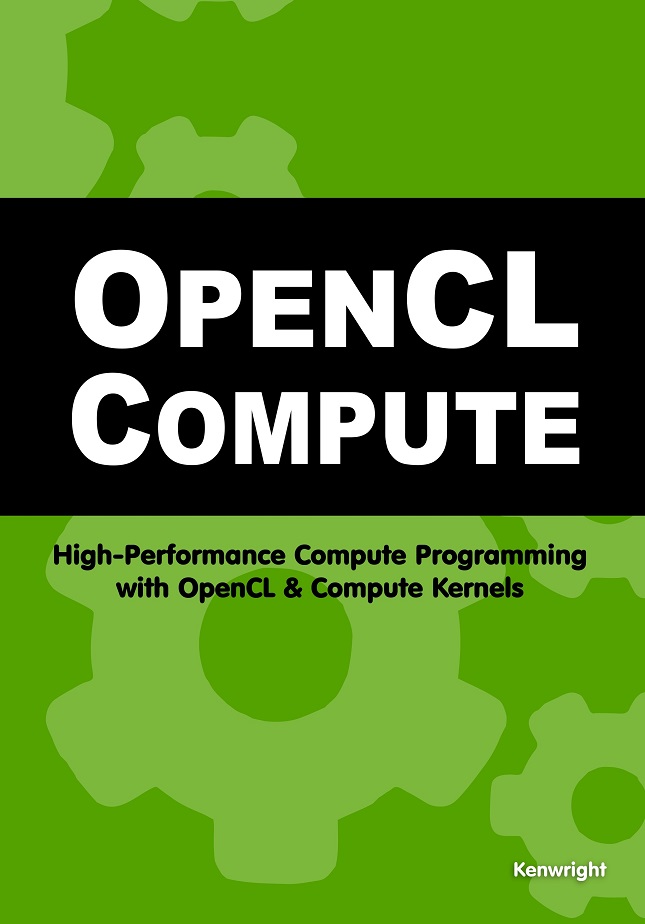
An insightful journey into OpenCL, "OpenCL Compute (Paperback)" explores its profound influence on the future of innovation. With clarity and enthusiasm, this essential read delivers fresh perspectives and actionable insights that inspire curiosity and spark meaningful progress.
From foundational principles to advanced techniques, "OpenCL Compute (Paperback)" delivers a well-rounded experience that caters to learners at every stage. Each page is infused with positivity and purpose, encouraging readers to think boldly and embrace new ideas with confidence. Embark on a transformative journey through the world of OpenCL with "OpenCL Compute (Paperback)", a masterfully written guide that blends clarity with depth.
This book doesn’t just inform—it challenges assumptions and introduces a bold, refreshing framework for thinking differently.
Same here. It’s rare to find a book that’s both intellectually rigorous and emotionally engaging—this one nails it.
February 22, 2026
A brilliant fusion of theory and practice. The case studies alone offer invaluable lessons that stick with you.
I felt like the author was guiding me personally. The tone was encouraging and the advice felt tailored to real challenges.
February 16, 2026
The author's mastery of GPU Computing is evident throughout. Every chapter feels like a masterclass.
I loved the mix of academic depth and practical relevance. It’s a rare balance that this book achieves beautifully.
February 16, 2026Stay updated with the latest from the book world
Don’t get me wrong, I’m as invested in keeping my job as the next weaver. When the boss brought in that big new power loom, I was pretty skeptical...
Read MoreBrands like Chipotle, Dunkin, and Starbucks have started offering new protein-dense menu items. Here are more companies making exciting protein-based ...
Read MoreHigher education faces looming threats from every direction. Dwindling enrollments. The demographic cliff. The enduring myth that professors have the ...
Read MoreEnhance your reading and learning experience
Create a dedicated reading space with good lighting and minimal distractions.
Use the Feynman Technique: teach what you learn to someone else to identify knowledge gaps.
Follow the 20-20-20 rule: every 20 minutes, look at something 20 feet away for 20 seconds.
Write documentation as if the next person reading it is a violent psychopath who knows where you live.
Organize books by color for visual appeal or by genre for practical access.
Use a pointer or your finger to guide your eyes. This can increase reading speed by 25%.
Sarah Johnson
Professional ReviewerYes! I found the visual summaries at the end of each chapter incredibly helpful for reviewing and retaining key ideas.
February 12, 2026